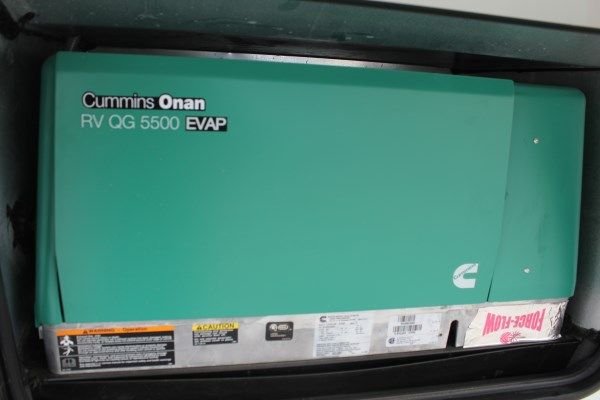
Stepping into the world of truly independent RV travel means embracing off-grid power, and for many seasoned adventurers, nothing quite says "uninterrupted power" like a fixed-mount Onan generator. Specifically, the Onan 5500 generator installation & RV integration represents a significant upgrade for serious boondockers and those who demand reliable AC power far from shore power pedestals. Imagine running your air conditioner, microwave, or charging all your devices without a second thought, miles from the nearest outlet. That's the freedom an Onan 5500 offers when expertly integrated into your RV's power system.
This isn't about slapping a noisy portable generator onto your bumper; it's about a seamless, quiet, and dependable power solution that becomes an integral part of your RV experience. Whether you’re upgrading an older rig or outfitting a new one for ambitious journeys, understanding this process is key to unlocking limitless adventure.
At a Glance: Powering Your Off-Grid Dreams
- Fixed-Mount Advantage: Say goodbye to portable generator hassle, noise, and fuel can management. Enjoy dependable, integrated power.
- The Onan QG 5500 LP: A robust 5500-watt (AC) workhorse designed for RVs, running on readily available liquid propane.
- Full System Integration: Generators are just one piece. The best setups combine them with solar, lithium batteries, and smart inverter/charger systems for ultimate flexibility.
- Specialist Installation is Key: Due to complexity, fuel lines, exhaust, and electrical, professional installation is crucial for safety and performance.
- Investment & Value: Expect a significant upfront cost ($12,500 – $18,000 typically) for a professional install, but gain peace of mind and true off-grid capability.
- Pre-Inspection is a Must: Not all RVs are "generator-prepped," and a thorough assessment ensures a smooth installation.
Why Choose a Fixed-Mount Onan for Your RV?
Portable generators have their place, but for long-term boondocking, backup power, or simply a more refined RV experience, fixed-mounted units like the Onan 5500 are a game-changer. The benefits extend far beyond convenience:
- Dependable AC Power: No more worrying about running out of gas mid-shower or overloading circuits. A fixed-mount generator provides a steady, reliable source of alternating current directly to your RV's electrical system, handled effortlessly by an automatic transfer switch. This means your essential appliances and systems always have power when you need them. To learn more about the benefits of fixed-mounted RV generators, consider the overall convenience and reliability.
- Reclaim Your Vacation Time: Forget the setup and breakdown dance of portable units – hauling out, positioning, fueling, securing, and then repeating the process in reverse. A fixed-mount Onan is always ready at the push of a button. This saves precious time and effort, allowing you to focus on enjoying your family and surroundings.
- Disrupted Peace? Not Here: Enclosed operation means significantly quieter performance compared to most portable generators. While a 5500 LP will still make noise, its 69-decibel full-load rating is often more manageable than open-frame portable units, especially when properly installed with good ventilation and exhaust routing.
Specialized RV power system integrators, like California RV Specialists in Northern California, focus precisely on these complete, reliable, and properly engineered power solutions. They understand that a generator isn't just an add-on; it's a vital component of a larger ecosystem.
Understanding the Onan QG 5500 LP: Your Off-Grid Powerhouse
The Onan QG 5500 LP (Quiet Gas, Liquid Propane) stands out as a popular choice for many RV owners seeking robust, reliable power. It’s designed specifically for RV applications, offering a substantial punch in a relatively compact form factor.
Key Specifications of the Onan QG 5500 LP:
- Fuel Type: Liquid Propane Gas (LP) – often preferred for its cleaner burn, easier storage than gasoline, and availability from the RV's onboard tanks.
- AC Running Watts: 5500 Watts – ample power to run common RV appliances, including a single air conditioner, microwave, and multiple smaller electronics simultaneously.
- Rated Voltage: 120 Volt, Single Phase.
- Max AC Current: 45.8 Amps – a significant output, capable of handling demanding loads.
- Engine: 4-Stroke, OHV, Air-Cooled Engine with a 653 CC Displacement.
- Weight: 288 Pounds (Dry Weight).
- Noise Level: 69 Decibels (Full Load) – designed with RVers in mind for quieter operation.
- Dimensions: 33.5 x 22.25 x 16.75 Inches.
- Features: EPA Certified, Automatic Low Oil Shutdown, Automatic Choke for easier starting.
- Warranty: 3 Years Limited Warranty.
It’s important to note that the QG 5500 LP is not inverter equipped. This means its power output is conventional AC, which is perfectly suitable for most RV appliances. For sensitive electronics, a high-quality RV inverter system is typically installed after the generator (or shore power) feeds the main electrical panel, creating a pure sine wave AC environment. You might also encounter inquiries about the RV QG 5500 EFI series, which offers electronic fuel injection for potentially better cold starts and fuel efficiency.
For those ready to delve deeper into specific models and make an informed decision, you can Explore Onan 5500 generators and their variations in more detail.
The Big Picture: Integrating with Your Off-Grid Power System
An Onan 5500 generator is a powerful piece of the puzzle, but for true off-grid independence, it needs to work harmoniously with other components. California RV Specialists excels at building these complete systems for motorhomes, fifth wheels, travel trailers, and even specialty mobile applications.
- Solar Charging Systems: Imagine your generator as your heavy lifter, kicking on for high-draw appliances like AC, while your integrating an RV solar charging system silently keeps your batteries topped off during daylight hours. This combination optimizes fuel usage and dramatically extends your silent power autonomy.
- Lithium Battery Upgrades: The move to lithium battery upgrades is one of the most impactful decisions for off-grid RVers. Lithium batteries offer significantly more usable capacity, faster charging, and a longer lifespan than traditional lead-acid batteries. They pair perfectly with a generator, allowing it to quickly "bulk charge" the larger lithium bank.
- Inverter + Charger Systems: A sophisticated RV inverter + charger system converts your battery's DC power into usable AC power for your appliances, eliminating the need to run the generator constantly for smaller loads. The "charger" aspect then efficiently uses the generator's (or shore power's) AC output to recharge your battery bank. These systems, often integrated with automatic transfer switches, provide seamless power transitions. Understanding advanced RV inverter + charger systems is crucial for modern RV power management.
- Battery Monitors & Power Management: To truly master off-grid living, you need to know exactly how much power you're using and how much you have left. Battery monitors and intelligent power management controls give you real-time insights, allowing you to optimize your generator run times and overall energy consumption, which is critical for mastering the art of RV boondocking.
These components, when installed and calibrated by experienced RV technicians, create a robust, reliable system. It’s the difference between having individual gadgets and a fully engineered solution.
Is Your RV Prepped? The Pre-Installation Assessment
Before any tools are picked up, a crucial step in Onan 5500 generator installation is a thorough inspection of your RV. This is especially vital for fifth wheels and travel trailers, where existing infrastructure might be lacking.
Why a Pre-Installation Inspection is Non-Negotiable:
- Space & Structure: Does your RV have a suitable compartment? The generator, weighing 288 lbs, requires a strong, stable platform. If a front storage compartment is used, it needs adequate dimensions (33.5x22.25x16.75 inches for the unit itself, plus clearance for ventilation and exhaust).
- Ventilation Requirements: Generators need airflow to operate safely and efficiently. Proper intake and exhaust venting are critical to prevent overheating and ensure safe operation.
- LP Gas Line Access: The Onan 5500 LP needs a direct connection to your RV's liquid propane system. The inspection confirms proximity, line size, and capacity.
- Exhaust Routing: A safe and effective exhaust system must be routed away from living spaces and flammable materials.
- Electrical Pathways: Planning for the main electrical connections, remote start/stop panel, and transfer switch placement is essential.
- Battery System Integration: While the Onan itself requires battery power for starting, a robust house battery bank (especially lithium) is paramount for a fully integrated off-grid system. The inspection will assess existing battery capacity and determine if additional batteries or heavier-gauge wiring are needed.
Some fifth wheels are "pre-prepped" with a designated generator compartment, including some wiring and a reinforced platform. Others require significant fabrication and additional materials. This inspection determines the scope of work, potential complexities, and ultimately, the final cost estimate for your Onan 5500 generator installation. Without it, you’re flying blind.
Demystifying the Installation Process
A professional Onan 5500 generator installation is a multi-faceted process, typically ranging from 16 to 24 hours of labor by experienced RV technicians. Each step is critical for safety, performance, and compliance.
Step 1: Strategic Placement & Sub-Structure Fabrication
The first and most critical step is determining the optimal location. This usually means a dedicated front storage compartment. Crucially, it must be an isolated compartment, ensuring no shared ventilation with batteries or fuel tanks for safety reasons. If the existing structure isn't robust enough, custom fabrication of a platform or base is required to safely support the generator's weight and absorb vibration.
Step 2: Generator Installation & Ventilation
Once the platform is ready, the generator unit is carefully moved into place and secured. Simultaneously, proper ventilation components are installed. This includes intake and exhaust vents to ensure the engine receives sufficient fresh air and dissipates heat effectively, preventing overheating and ensuring long-term reliability.
Step 3: LP Fuel Line System Connection
Connecting the generator to the RV’s liquid propane (LP) fuel line system is a precise task. This involves tapping into the main LP line, installing proper shut-off valves, and ensuring all connections are leak-free and meet safety standards. LP is a powerful fuel, and correct installation is paramount to prevent hazards.
Step 4: Exhaust Kit & Connections
The exhaust system is then meticulously installed. This involves routing the exhaust pipe safely away from the RV's interior, living areas, and any flammable components. Mufflers and proper heat shielding are critical to mitigate noise and heat, and all connections must be secure and leak-proof to prevent carbon monoxide intrusion. The initial startup will "burn off" any manufacturing residue from the exhaust system, which is normal.
Step 5: Electrical Wiring & Automatic Transfer Switch
This is where the generator integrates with your RV's electrical grid. All necessary electrical wiring and connections are made, following RVIA and NEC standards. This includes:
- Main AC Output: Connecting the generator's output to an automatic transfer switch (ATS). The ATS is a smart device that senses when the generator (or shore power) is active and automatically switches your RV's main electrical panel to that power source, preventing dangerous backfeeds.
- Remote Controller/Harness: Installing the remote start/stop panel in a convenient location inside the RV, along with its associated wiring harness.
- Battery Wiring: The generator requires a 12V DC power supply from your RV's house battery bank for starting. Proper gauge wiring and fusing are installed for this connection. Depending on your off-grid ambitions, this might also involve upgrading your battery system.
Step 6: Battery System Integration (If Applicable)
For those pursuing maximum off-grid capability, additional batteries (especially lithium) and heavier gauge wiring may be required to support the increased charging capacity provided by the Onan 5500. This ensures your battery bank can handle rapid charging from the generator and store enough power for extended use.
Step 7: Startup, Testing & Carbon Monoxide Detection
With all connections made, the system undergoes its first startup. This critical phase involves testing the generator under load to confirm proper operation, voltage, and frequency. The exhaust system will burn off any initial coatings. Finally, if your RV isn't already equipped, a new or additional carbon monoxide (CO) gas detector is installed. This is a non-negotiable safety measure for any generator installation, providing an early warning system against dangerous exhaust fumes.
California RV Specialists handles these complex installations with precision, ensuring every detail adheres to the highest safety and performance standards.
Cost Considerations for Your Onan 5500 Install
Investing in an Onan 5500 generator installation is a significant decision, and understanding the costs involved helps in planning your off-grid future.
Typical Installation Range: Expect the ONAN ON-BOARD LP GENERATOR INSTALLATION to typically range from $12,500 – $18,000.
What Influences the Cost?
- RV Type & Pre-Prepped Status: As mentioned, a fifth wheel that is already pre-prepped for a generator will generally incur lower fabrication costs than one requiring extensive modifications. If no pre-existing infrastructure is present, additional parts and materials will be required.
- Labor Hours: Installation labor typically varies from 16 to 24 hours. This is charged as a straight-time operation at a shop labor rate of $200.00 an hour. The variability stems from the unique nature of each RV and installation scenario. For example, routing long LP lines or complex exhaust systems will take more time.
- Parts & Materials: This includes the generator unit itself, the exhaust kit, fuel line components, electrical wiring, breakers, the automatic transfer switch, remote panel, ventilation components, mounting hardware, and any custom fabrication materials.
- Additional Systems: If you opt for simultaneous upgrades like new lithium batteries, a larger inverter/charger, or solar panels, these costs will be separate from the core generator installation but often make sense to perform concurrently for efficiency.
- Incidentals: Freight charges for the generator and necessary shop supplies are typically not included in the base estimate and will be added to the final invoice.
While the upfront cost is substantial, consider it an investment in freedom, convenience, and the expanded capabilities of your RV. This isn't just a purchase; it's an enhancement to your entire RV lifestyle.
Beyond Installation: Maintenance & Support
A properly installed Onan 5500 generator is designed for years of reliable service, but like any engine, it requires basic maintenance.
- Routine Maintenance: California RV Specialists provides new installation and basic maintenance services only. This typically includes oil changes, filter replacements, and general system checks. Regular maintenance, as outlined in your Onan owner’s manual, is crucial for longevity and performance.
- When to Seek an Onan Repair Center: It's important to understand the limits of installation specialists. Firms like California RV Specialists do not provide generator mechanical or internal electrical repairs. If your Onan unit develops an internal issue, mechanical fault, or requires specialized electrical diagnostics beyond basic connections, you will need to contact an authorized Onan repair center. These centers have specialized tools and training for engine and internal component repairs.
Knowing who to call for what ensures you get the right expertise for any situation your generator might encounter.
Optimizing Your Off-Grid Experience with Your Onan 5500
Once your Onan 5500 is expertly installed and integrated, you’re ready to truly embrace off-grid living. Here are some tips to maximize your new power system:
- Strategic Generator Use: While powerful, your generator is best used for high-draw appliances or rapid battery charging. For smaller, intermittent needs, rely on your inverter and battery bank, especially if you have lithium batteries paired with a solar system.
- Monitor Your Fuel: Since your Onan 5500 runs on LP, keep an eye on your propane tank levels. Most RVs have a gauge, but knowing your consumption rate during generator use will help you plan refills.
- Quiet Hours Awareness: Even with its relatively quiet operation, be mindful of campground quiet hours when running your generator. Use your battery bank and inverter for late-night or early-morning power needs.
- Winterization & Storage: If you live in a colder climate or store your RV for extended periods, follow Onan's recommendations for winterization to protect the engine and fuel system.
- Periodic Exercise: Generators need to be run periodically, even when not in active use. Consult your manual for recommended exercise intervals (e.g., once a month for an hour with a moderate load) to keep all components lubricated and functioning properly.
By thoughtfully managing your generator in conjunction with your solar, battery, and inverter systems, you'll unlock the full potential of uninterrupted power, wherever your adventures take you.
Your Next Step Towards Uninterrupted Power
The prospect of an Onan 5500 generator installation & RV integration can feel daunting, but with the right expertise, it transforms your RV into a truly independent mobile sanctuary. Whether you’re a Class A motorhome owner, navigating the open road in a fifth wheel, or running a specialized mobile business, dependable power is no longer a luxury—it’s a necessity.
The key takeaway is clear: while the decision to upgrade is yours, the execution demands professional, experienced RV technicians. Specialists like California RV Specialists offer the comprehensive knowledge and hands-on skill to design, install, and integrate your entire off-grid power solution, ensuring every component works seamlessly for your peace of mind.
Ready to cut the cord from shore power and embrace true off-grid freedom? Start with a professional consultation and inspection to chart the course for your RV's ultimate power upgrade.